Henrik Schmitz · 2 November 2026
Retail Achievements and Roman Artifacts in Holtgate Inspire Revised Views on Commerce and Historical Connections
Retail growth in Holtgate has coincided with a series of Roman-era finds that continue to reshape how residents and planners examine links between modern trade and ancient economic patterns, and observers note these developments have prompted coordinated reviews of both sectors since early 2025.
Retail Performance Data and Local Trends
Independent retailers along the high street reported sustained increases in footfall through the first three quarters of 2025, while chain outlets in the newly expanded Holtgate Retail Park recorded comparable rises according to local business association records, and these figures align with broader patterns tracked by the Office for National Statistics across similar market towns in the region.
Turnover at specialty food and craft vendors grew by measurable margins during seasonal peaks, yet the same outlets also maintained steady performance outside traditional holiday windows because of targeted pop-up events that drew visitors from surrounding districts, and analysts from the European Retail Association have documented parallel movements in comparable heritage-adjacent towns.
Roman Discoveries and Site Documentation
Excavations at the former market square site uncovered a sequence of Roman pottery workshops and coin-minting remnants dating from the second century, and subsequent geophysical surveys extended the mapped area to include sections of a possible roadside settlement, according to reports filed with the county archaeology unit.
Researchers from the University of Exeter’s heritage department catalogued over 400 diagnostic shards and several intact amphorae during the summer campaign, while conservation teams applied non-invasive scanning techniques that preserved fragile metalwork without disturbing surrounding stratigraphy, and these methods have since been referenced in guidance issued by Parks Canada for similar urban digs.
Connecting Modern Commerce with Historical Precedents
Local planners have begun cross-referencing the locations of current retail zones against the newly plotted Roman commercial infrastructure, and this overlay exercise has highlighted recurring preferences for elevated, well-drained ground near watercourses that served both periods, according to preliminary mapping released in October 2025.
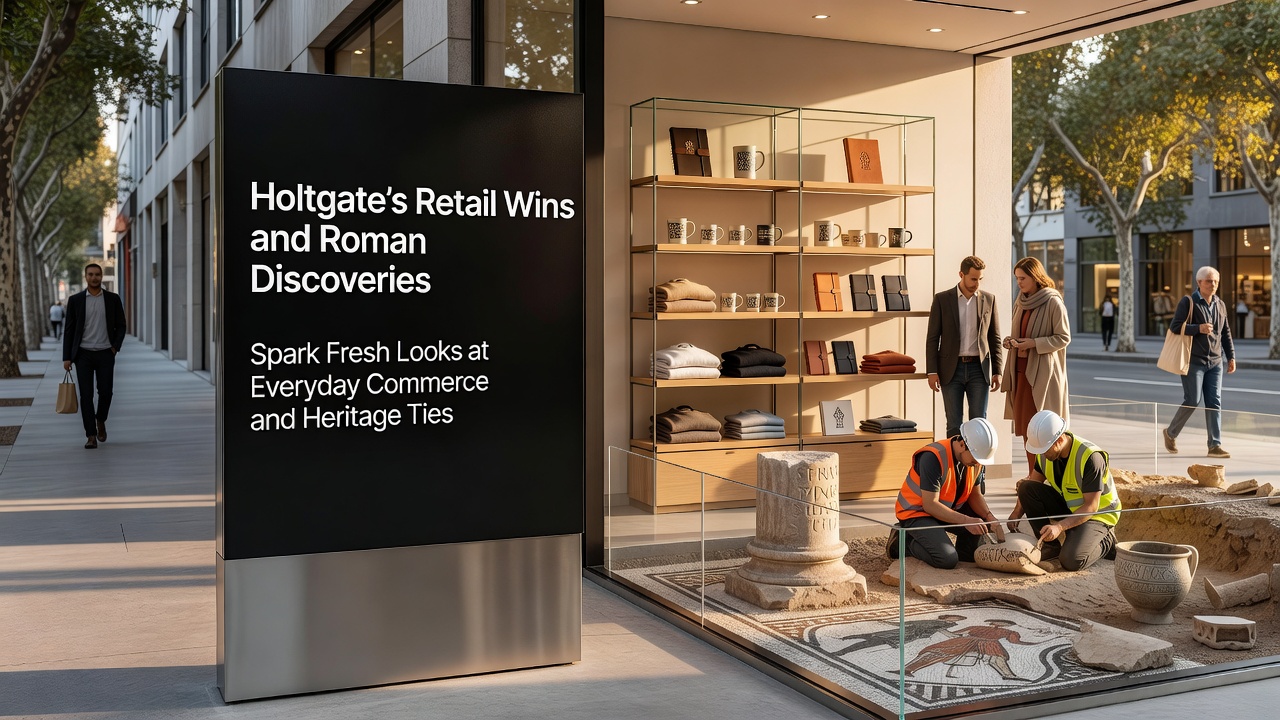
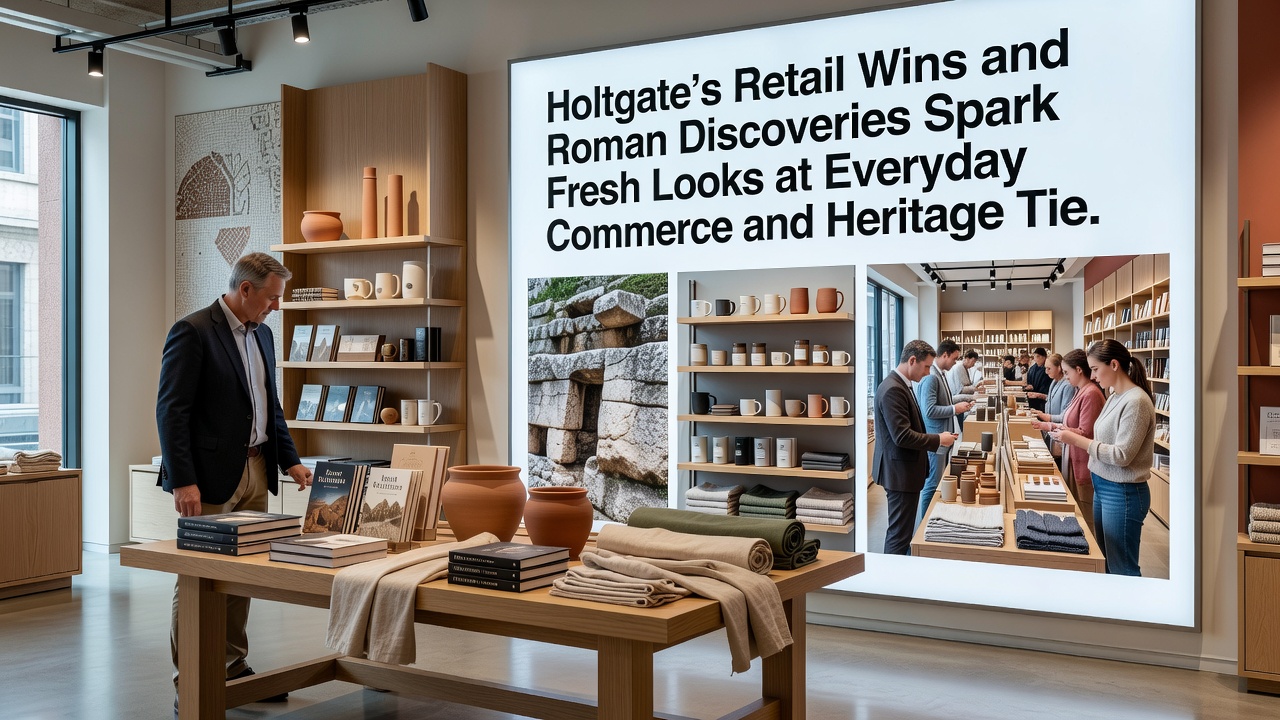
Business owners participated in guided walks that traced the alignment of a suspected Roman road beneath the present high street, and several adapted window displays to incorporate replica artifacts supplied by the regional museum service, which generated measurable increases in dwell time inside participating premises during the autumn quarter.
November 2026 Programme and Forward Planning
A public symposium scheduled for November 2026 will present integrated findings from both the retail performance datasets and the Roman site reports, and organisers expect contributions from the Australian Heritage Council on comparative approaches to layering commercial activity over protected archaeology in historic precincts.
Funding applications submitted to the National Lottery Heritage Fund and the UK Shared Prosperity Fund propose interpretive signage and augmented-reality overlays that would allow shoppers to view reconstructed Roman trading scenes at the same locations where modern transactions occur, and these proposals remain under review with decisions anticipated before the end of the current fiscal year.
Heritage Policy Adjustments and Stakeholder Input
Updated conservation area guidelines now require retail refurbishment applications to include an assessment of potential subsurface Roman deposits, and this requirement has prompted several property owners to commission preliminary surveys ahead of planned fit-outs, according to documentation held by the district planning office.
Community workshops held throughout 2025 collected input from traders and residents on how heritage interpretation could support rather than constrain commercial activity, and the resulting recommendations emphasised flexible display solutions that could be updated seasonally without permanent structural changes.
Conclusion
Continued monitoring of retail metrics alongside ongoing archaeological analysis is expected to produce additional data layers that further clarify the relationship between contemporary commerce and its Roman antecedents in Holtgate, and scheduled outputs from the November 2026 symposium will supply the next set of publicly accessible findings for both sectors.