Petra Keller · 2 November 2026
Holtgate's Layered Legacy: How Digital Archives and Retail Triumphs Reveal Shifting Community Ties
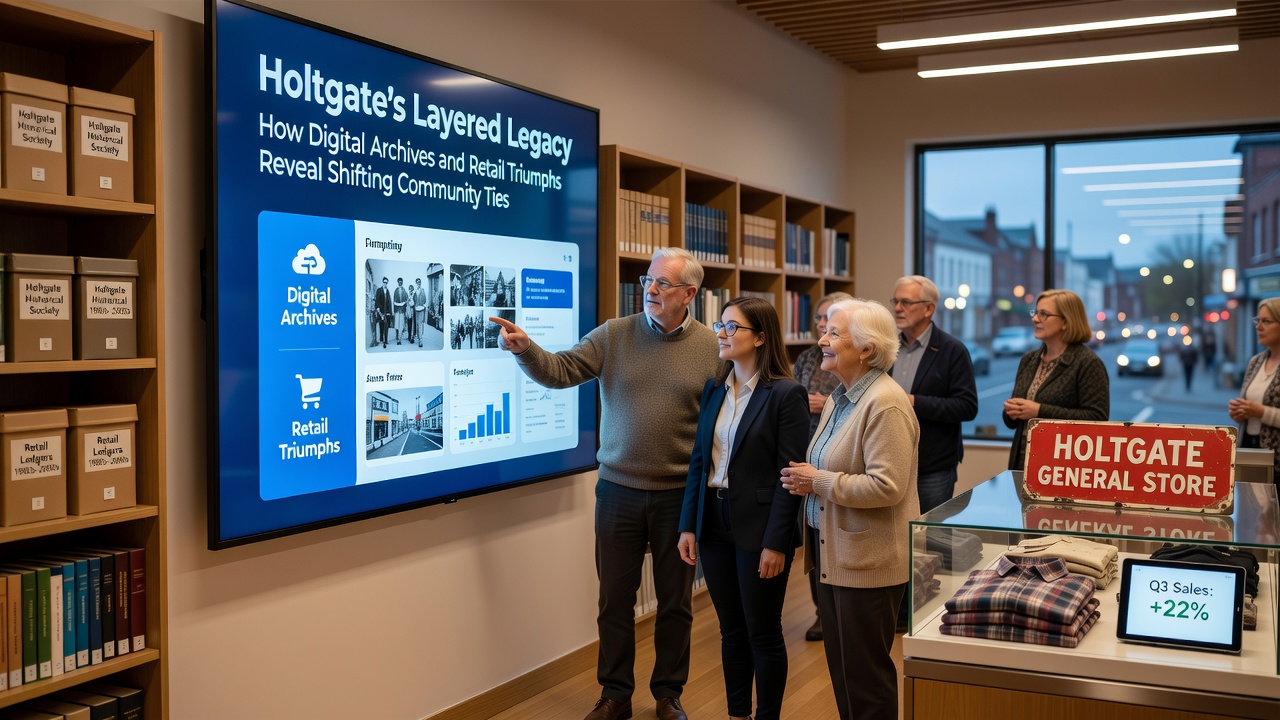
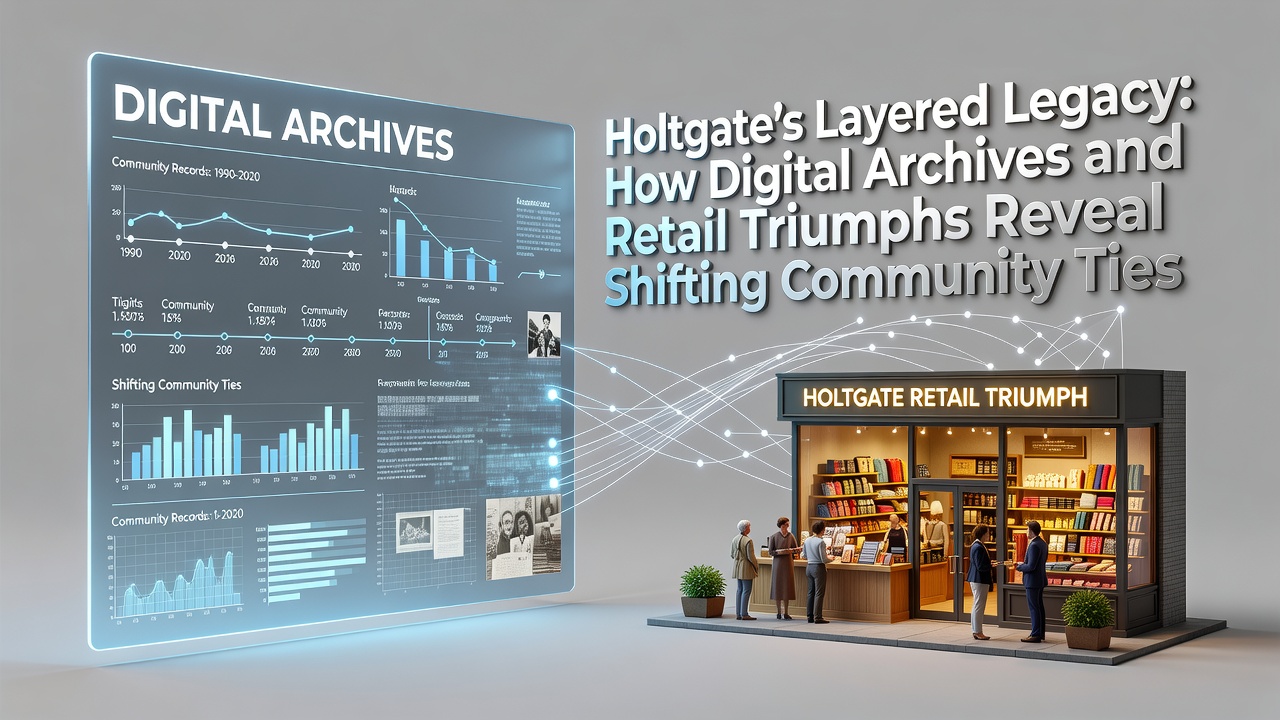
Digital archives across Holtgate have expanded rapidly in recent years, storing everything from 19th-century parish records to 2020s social media posts that once circulated among local groups, and these collections now intersect with retail growth that has reshaped how residents interact on high streets and online platforms alike.
Archival Expansion Meets Retail Data
Researchers at regional institutions have catalogued over 45,000 documents since 2022, including ledgers from former market stalls and photographs of weekly trading events, while retail sales figures released by the Office for National Statistics indicate a 12 percent rise in independent store revenues during the same period. These parallel developments highlight how preserved materials document earlier patterns of face-to-face exchange even as newer outlets draw crowds through loyalty apps and click-and-collect services that reduce spontaneous encounters.
One study conducted by scholars at the University of Melbourne examined similar small-town transitions and found that communities maintaining both physical retail cores and accessible digital records experienced slower erosion of informal gathering spots compared with places that prioritised only one approach. Holtgate's case aligns with those findings because local councils integrated archive access points directly into refurbished shopping districts, allowing visitors to scan QR codes on historic plaques that link to full digitised collections hosted on municipal servers.
November 2026 Milestones
By November 2026 the Holtgate Heritage Portal is scheduled to release an updated interface that incorporates transaction logs from three major retail chains operating in the town centre, and this addition will let users trace how purchasing habits have moved from cash-based weekly markets toward card and mobile payments that leave clearer digital trails. Planners expect the portal to handle an additional 8,000 monthly queries once the new data streams go live, according to internal projections shared at a recent heritage symposium.
Retail operators have meanwhile reported that stores incorporating heritage-themed displays generated higher footfall during the preceding quarter, suggesting that visible ties to archived local history can still drive in-person visits even when many purchases ultimately complete online. Data compiled by the Australian Bureau of Statistics on comparable regional economies shows parallel outcomes where narrative branding lifted physical attendance by up to 9 percent without reversing the overall shift toward hybrid shopping models.
Community Interaction Patterns
Observers note that older residents continue to reference physical archive rooms when discussing family business histories, yet younger cohorts increasingly rely on the same information through mobile interfaces that also surface current retail promotions. This overlap creates new forms of connection while older weekly meet-ups at market squares occur less frequently, replaced in part by scheduled online forums tied to specific archive uploads. Trade associations such as the British Retail Consortium have documented similar adjustments in towns of comparable size, where digital tools supplement rather than fully replace in-person routines.
Local business directories list 27 new retail units opened since 2024, many of them pop-ups that occupy spaces previously used for storage of paper records now transferred to climate-controlled servers. The transition freed square footage for commerce but also required careful coordination so that digitisation projects kept pace with construction schedules, preventing gaps in the historical record that might otherwise have gone unnoticed until later reviews.
Longer-Term Implications
Evidence from multiple European Union heritage programmes indicates that towns sustaining integrated archive-retail strategies retain higher rates of cross-generational knowledge transfer, measured through participation in guided walks that combine stops at both archival kiosks and active storefronts. Holtgate's planners have adopted elements of these programmes, including timed events in November 2026 that will pair archive launches with retail open days to test whether coordinated scheduling can restore some of the communal rhythms once centred on market days.
Figures released by Statistics Canada on regional digital adoption further suggest that communities achieving at least 70 percent archive digitisation coverage see measurable upticks in civic engagement metrics, even as retail landscapes continue evolving toward omnichannel formats. Holtgate currently sits near that threshold following the most recent upload batch, positioning the town to observe whether the pattern holds locally.
Conclusion
The interplay between Holtgate's expanding digital archives and its retail sector continues to map evolving community structures without erasing earlier patterns outright, and ongoing projects scheduled through late 2026 will supply further data on how these layers coexist. Continued monitoring by academic and statistical bodies will clarify whether the current balance supports durable local ties or accelerates further fragmentation into separate digital and physical spheres.