Lars Lorenz · 19 October 2026
Holtgate Hill Wind Turbine Proposal Fuels Local Discussions on Development and Heritage
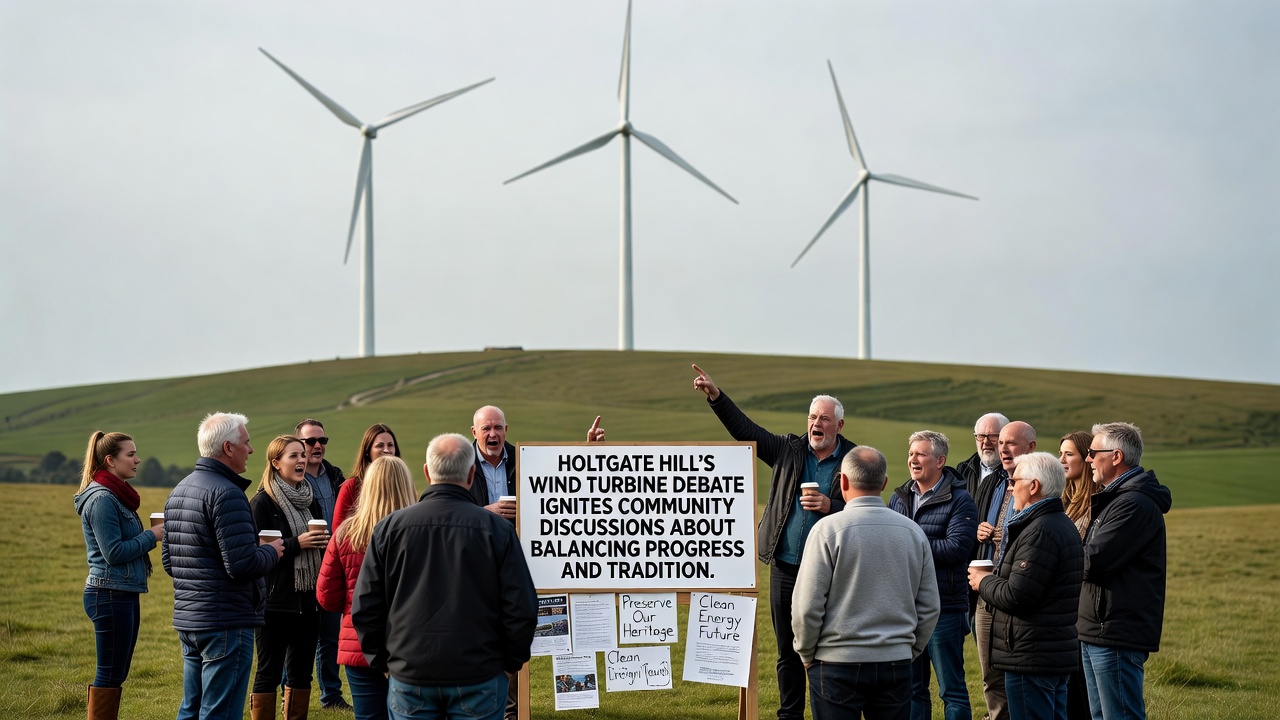
Residents in Holtgate have gathered repeatedly over recent months to examine a proposal for wind turbines on Holtgate Hill, where plans outline up to four turbines each standing 120 meters tall, and local records indicate the project could generate enough electricity for approximately 4,000 households according to preliminary assessments submitted to planning authorities. Data from the Department of Energy and Climate Change shows wind power contributed 29 percent of the UK's electricity in 2025, yet community sessions in Holtgate have highlighted tensions between such national targets and the preservation of the hill's medieval earthworks plus its role in local folklore traditions that date back centuries.
Background of the Proposal
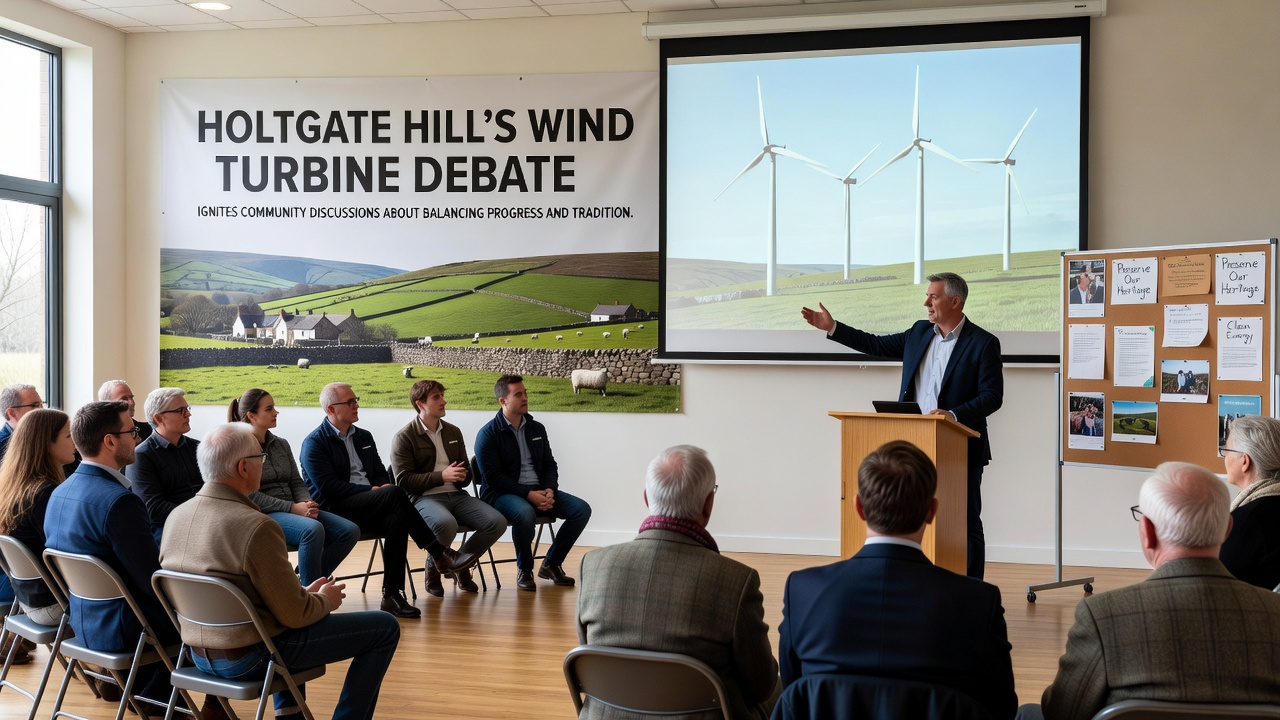
Developers submitted the initial application in early 2025 after conducting feasibility studies that measured average wind speeds at 7.2 meters per second across the hilltop, and these figures align with benchmarks used by the International Renewable Energy Agency in similar rural European projects. Planning documents reveal the turbines would occupy a 15-hectare section of the hill while avoiding direct overlap with scheduled ancient monuments, though some access roads would require upgrades near protected hedgerows. Meetings held at the Holtgate community hall drew over 200 attendees by mid-2025, where representatives from the developer presented simulations showing visual impact limited to certain viewpoints, and residents reviewed maps that outlined buffer zones around nearby farms and walking paths.
Environmental and Economic Data Presented
Proponents cited studies from the U.S. Department of Energy that demonstrate wind farms can reduce carbon emissions by 0.5 tons per megawatt-hour generated, and they noted the Holtgate project might offset roughly 8,000 tons annually once operational. Economic projections shared at the sessions estimated 35 temporary construction jobs plus ongoing maintenance roles that could total five full-time positions, while business owners in the town center mentioned potential increases in visitor numbers drawn to new energy tourism routes. Soil surveys conducted on site found stable bedrock suitable for foundations, and hydrological reports confirmed minimal risk to local watercourses when proper drainage measures are installed.
Heritage and Visual Concerns Raised by Residents
Opposing voices at the gatherings pointed to the hill's designation as a local heritage site since 1978, and they referenced archaeological reports that document Iron Age settlements plus Victorian-era boundary markers still visible on the slopes. Visual assessments provided by independent consultants showed the turbine blades could appear within 2 kilometers of the historic Holtgate manor house on clear days, prompting some attendees to request further modeling of seasonal foliage changes that might alter sightlines. Local historians presented archival photographs from the 1930s that illustrate the hill's unchanged profile, and they emphasized how such continuity supports ongoing educational programs for school groups who visit the area each spring.
One study released by the University of Edinburgh in 2024 examined similar installations across Scotland and found that 62 percent of surveyed communities reported initial apprehension followed by acceptance after five years of operation, though researchers stressed that outcomes depend heavily on early consultation quality and revenue-sharing agreements. In Holtgate, organizers have scheduled a formal public consultation for October 2026 that will include updated noise modeling and shadow flicker calculations before any planning committee decision, and transport planners have already modeled delivery routes for the turbine components that would use reinforced sections of the A-road network to minimize disruption.
Community Engagement Process and Next Steps
Facilitators have divided subsequent workshops into themed sessions covering topics such as biodiversity monitoring, where surveys have recorded nesting sites for several protected bird species on the lower slopes, and economic modeling that explores potential community benefit funds modeled after Australian wind projects in Victoria state. Participants reviewed data showing that modern turbines incorporate radar-absorbent materials and automatic shut-off systems during bird migration periods, measures that address some wildlife concerns raised during the July 2025 forum. Transport logs indicate that blade deliveries would occur over three nights in 2027 if approved, with police escorts arranged to handle narrow village lanes, and developers have committed to restoring any damaged verges within six months of installation.
Additional input has come from the European Environment Agency, whose 2025 report on renewable siting practices recommends buffer distances of at least 500 meters from residential properties, a standard already incorporated into the Holtgate layout. Local business associations have collected signatures for a petition that requests transparent financial disclosures, while heritage groups continue to advocate for independent visual impact audits before the October 2026 deadline. Planning officers have confirmed that all public comments will be logged and summarized in the final report presented to the district council, ensuring every submission receives consideration alongside technical assessments.
Conclusion
Records show the Holtgate Hill proposal remains in the pre-application stage with multiple rounds of consultation still ahead, and outcomes will depend on how planners weigh the compiled environmental data against documented heritage protections. Residents continue to attend sessions that present updated technical details, and observers note the process has already produced detailed maps and studies that both sides reference in ongoing exchanges. The October 2026 consultation date marks the next major milestone where final submissions can influence the trajectory of the project, and local archives will preserve the full record of discussions for future reference.