Lars Lorenz · 16 November 2026
Archaeological Finds at Holtgate Roman Bridge Trigger Reviews of Stream Defenses and School Sustainability Initiatives
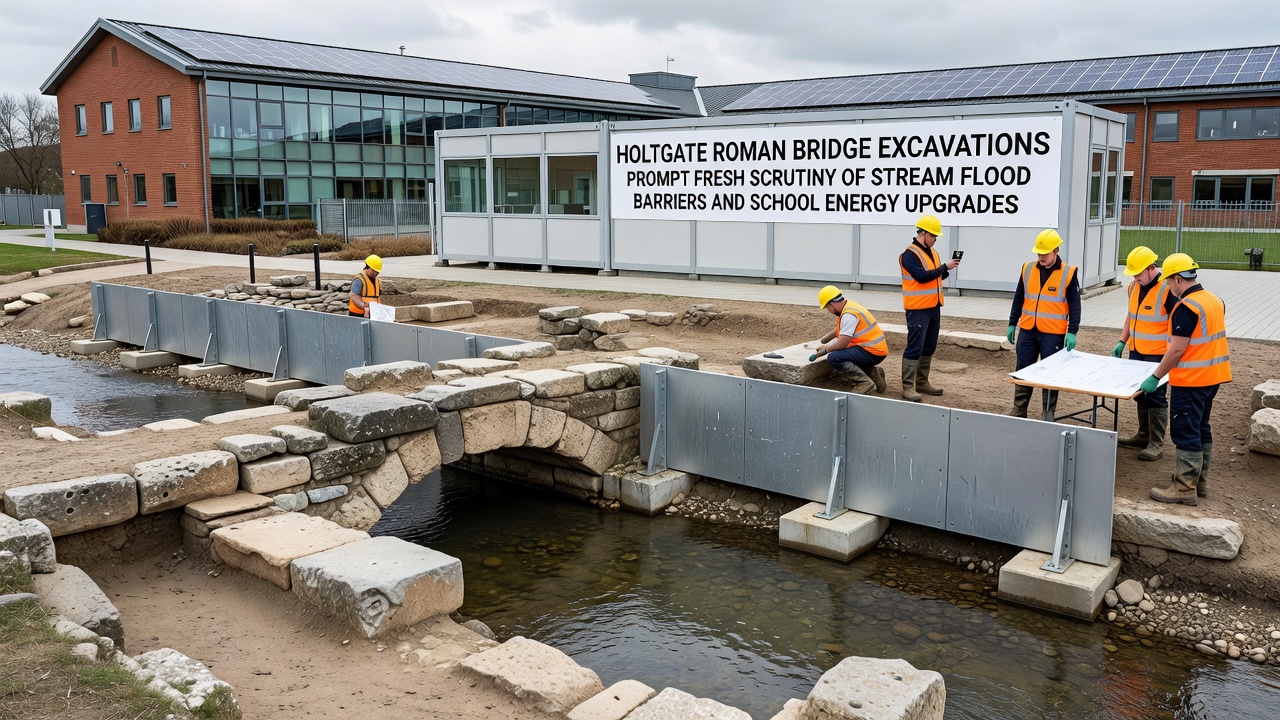
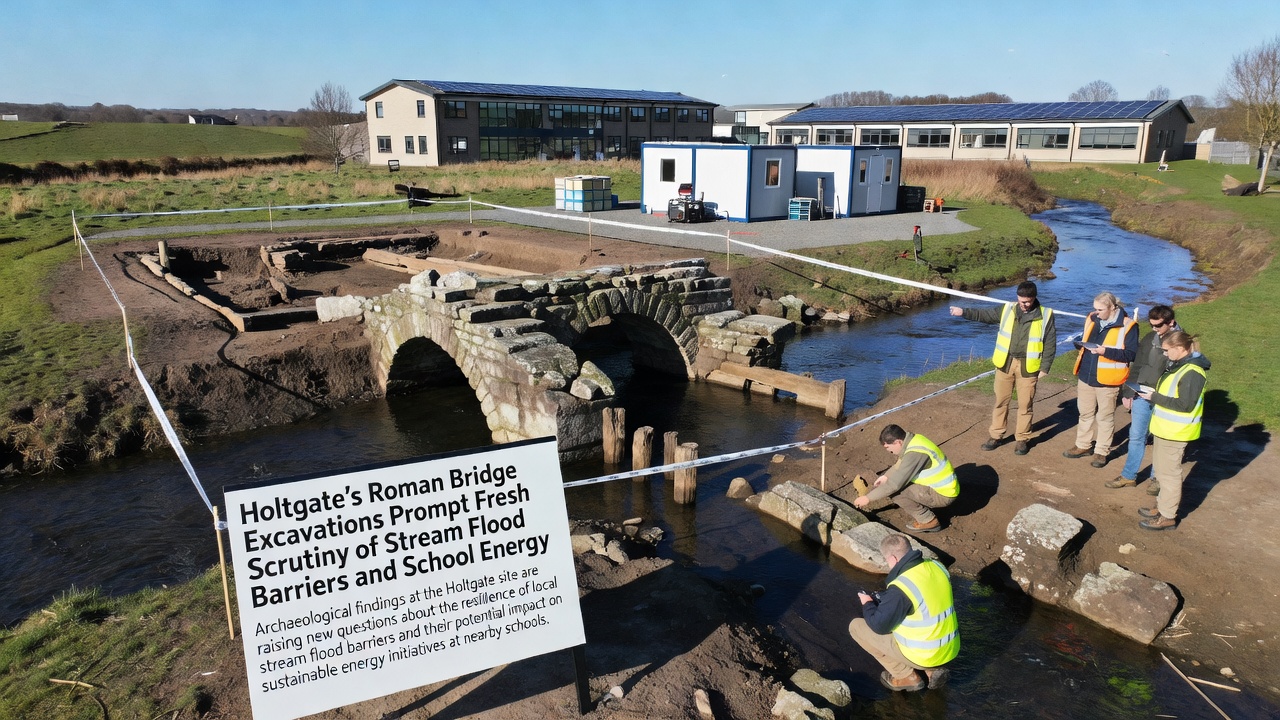
Archaeologists uncovered substantial remains of a Roman-era bridge structure along the stream corridor in Holtgate during late 2026, and these discoveries have directed attention toward existing flood barrier systems and planned energy improvements at local schools. The site, located near the historic waterway, yielded stone foundations, timber pilings, and associated artifacts that date back to the first and second centuries, according to preliminary reports from the excavation team. Work progressed steadily through November 2026 as researchers documented layers of sediment and construction techniques that reflect Roman engineering practices in the region.
Details of the Excavation Process
Teams employed non-invasive scanning methods before moving to targeted digs, which allowed them to map subsurface features while minimizing disturbance to the surrounding landscape. Data collected during this phase revealed that the original bridge crossed a narrower channel than the modern stream bed, a configuration that has implications for current flood management structures built along the banks. Local authorities coordinated with heritage specialists to ensure compliance with preservation guidelines throughout the November 2026 fieldwork period, and the process incorporated input from regional environmental monitoring groups.
Implications for Stream Flood Barriers
Findings from the dig prompted engineers to examine the placement and design of flood barriers installed along the same waterway in recent decades. Records show these barriers were constructed to address seasonal water level fluctuations, yet the Roman remains indicate that earlier channel alignments differed from contemporary mappings used in barrier planning. Researchers cross-referenced excavation data with hydrological surveys, and this comparison highlighted areas where updated models might improve barrier performance without affecting protected archaeological zones. The European Environment Agency has published guidance on integrating heritage considerations into flood defense projects, and officials referenced similar approaches when scheduling follow-up assessments.
Connections to School Energy Upgrades
Parallel reviews extended to energy efficiency projects at schools situated near the excavation area, where upgrades such as insulation retrofits and renewable heating systems were already in progress. Project timelines aligned with the November 2026 discoveries, leading planners to adjust installation methods around potential subsurface sensitivities identified during the bridge work. Energy consumption data from the schools indicated opportunities for further reductions through targeted interventions, and teams incorporated archaeological buffer zones into site plans to avoid conflicts with heritage features. Observers note that such coordination mirrors strategies documented in reports from Australian government sustainability programs, which emphasize combined infrastructure and cultural resource management.
Community and Regulatory Responses
Residents received updates through public meetings held in early November 2026, where representatives outlined revised timelines for barrier inspections and school project phases. Documentation from these sessions shows emphasis on transparent communication regarding how excavation results influence ongoing infrastructure decisions. Regulatory bodies required additional environmental impact statements that factor in the newly documented Roman remains, and this requirement extended review periods for both flood-related and energy-related initiatives. Those involved in the process consulted datasets from the U.S. National Park Service heritage preservation guidelines to inform best practices for balancing development needs with site protection.
Technical Assessments and Data Integration
Engineers compiled integrated datasets that combined excavation measurements with stream flow records and building energy audits from the affected schools. Analysis revealed correlations between historical channel shifts and current flood patterns, while energy modeling demonstrated potential savings from optimized upgrade sequences. These assessments proceeded without halting active work at the sites, and progress reports submitted in November 2026 indicated steady advancement on multiple fronts. Coordination among archaeologists, civil engineers, and facilities managers ensured that each discipline contributed specialized input to the overall evaluation framework.
Conclusion
The sequence of events beginning with the Roman bridge excavations continues to shape infrastructure planning across Holtgate, as findings feed into revised protocols for flood barriers and school energy systems. Ongoing documentation from November 2026 onward supports evidence-based adjustments that respect both historical resources and functional requirements. Further phases of assessment will draw on accumulated data to guide subsequent decisions, maintaining alignment among heritage, environmental, and educational priorities.